

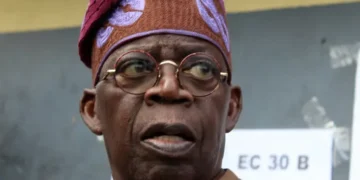

















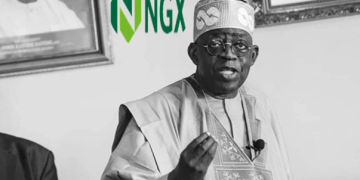



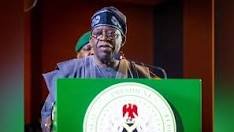
President Bola Tinubu addressed Nigeria’s at 66th Independence Day anniversary to declare that the country has passed the hardest stage of his economic reforms and is now entering a new phase focused on shared prosperity.
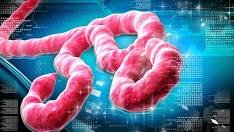
Speaking on Thursday, the president likened Nigeria’s condition in 2023 to that of a cancer patient who must choose between painful treatment and merely numbing the pain.
He said his administration chose treatment, and he rejected calls to bring back fuel subsidies, warning against what he called “addictive subsidies.” In his words, the emergency treatment is over.
Tinubu pointed to economic growth above 4 per cent this year, falling inflation, rebuilt foreign reserves and a stabilised foreign exchange market.
He also said Nigeria recorded its highest-ever non-oil export revenue in 2025, exceeding $6 billion.
Looking ahead, he said the government’s priority is to bring down the cost of living by making food and goods cheaper to produce and move.
Plans include expanded irrigation and dry-season farming, better access to seeds and fertiliser, mechanisation, and new roads, railways and ports.
He also promised to use Nigerian gas to power new industries and to extend digital connectivity to underserved communities.
The president acknowledged that many families still struggle, saying their hardship predates his reforms.
He cited the Nigerian Education Loan Fund (NELFUND),the CREDICORP consumer credit scheme, improvements to the National Social Register and the reformed pension programme as support meant to bridge the gap while the economy grows.
He closed by urging Nigerians to keep moving forward, saying the country has passed through its own “Red Sea.

Administrator and Writer