




































Ellah Lakes Plc has announced the acquisition of the first batch of expellers and presses for its proposed Palm Kernel Oil (PKO) Mill, signalling a new phase in its move beyond primary agricultural production into higher-value processing.
According to the press release on NGX, the installation of the equipment is expected to be completed by the end of the third quarter of 2026, after which it plans to begin producing Palm Kernel Oil and Palm Kernel Cake (PKC), a by-product widely used in the animal feed industry.
In a separate development, Ellah Lakes announced that its piggery operations have surpassed the 1,000-pig threshold, a milestone the company described as positioning it among the leading piggery operators in Edo State.
The company has also commenced the sale of gilts — young female pigs — creating what management characterised as an additional revenue line.
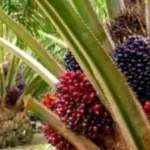
The PKO Mill development forms a central part of Ellah Lakes’ strategy to extract more value from its oil palm operations, which remain the company’s core plantation asset.
By processing palm kernels on-site into oil and cake, it aims to move further up the value chain rather than selling raw agricultural output.
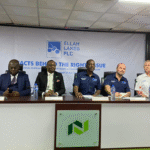
Chief Executive Officer Chuka Mordi said the milestones reflect the continued execution of the company’s broader strategy.
These milestones reflect the continued execution of our strategy to build Ellah Lakes into a more integrated and commercially resilient agribusiness platform.
The acquisition of equipment for our PKO Mill advances our move into higher-value processing, while the growth of our piggery operations strengthens an important cash-generating vertical within our business model, Mordi said.
He added that as plantation assets continue to mature, the company’s priority is to complete key installations, scale production efficiently, and build the infrastructure required to support sustainable long-term growth.
Ellah Lakes said its livestock vertical is designed to provide near-to-medium-term cash flow as its plantation assets — spanning oil palm, cassava, maize, and soybean — continue to mature.
The piggery business is intended to diversify revenue streams beyond the plantation cycle, which typically involves longer gestation periods before full commercial output is achieved.
Looking ahead, the company said it plans to install an abattoir and cold chain facility as part of the next phase of its piggery scale-up.
The infrastructure is intended to improve processing capacity and enhance access to downstream markets for livestock products.
Company Background
Established in 1980 as a fish farming enterprise, Ellah Lakes underwent a strategic transformation following the 2019 acquisition of Telluria Limited. Headquartered in Benin City, Edo State, the company is developing a diversified portfolio focused on high-demand commodities including oil palm, cassava, maize, and soybean.
Its model integrates primary production with downstream processing into edible oils, animal feed, and other value-added products.
Ellah Lakes aims to become a leading indigenous agro-industrial player in West Africa while contributing to Nigeria’s food security goals. The company is listed on the Nigerian Exchange (NGX: ELLAHL AKES).

Administrator and Writer