





























The Nigerian Midstream and Downstream Petroleum Regulatory Authority (NMDPRA) has rolled out a sweeping new competition framework to dismantle monopolistic practices and stamp out price manipulation across the country’s oil and gas industry.
At a stakeholders’ consultation forum held in Abuja on Tuesday, the regulator presented the draft Midstream and Downstream Petroleum Prevention of Anti-Competitive Practices and Behaviour Regulations, 2026, made up of 138 rules organised into 23 parts and covering competition issues across the entire midstream and downstream petroleum value chain.
NMDPRA Chief Executive Rabiu Umar explained that the initiative is rooted in law rather than improvisation: the framework is being developed pursuant to Section 216 of the Petroleum Industry Act (PIA) 2021.
He described the goal as striking a balance between market discipline and investor confidence, noting that the rules are meant to prevent anti-competitive practices, address abuse of dominance, promote fair and non-discriminatory access to essential infrastructure, and enhance transparency and market efficiency.
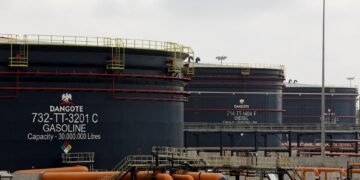
Once finalised, the regulations would outlaw a broad set of practices — price-fixing, collusion, market allocation, bid-rigging, coordinated supply restrictions, and the abuse of dominant market positions. They would also extend regulatory oversight to access to critical infrastructure such as pipelines, storage terminals, jetties, bulk-loading facilities and depots, while tightening disclosure requirements around tariffs, fees and capacity.
Giving a breakdown of the draft, NMDPRA’s Secretary and Legal Adviser, Dr Joseph Tolorunse, said the rules go well beyond conventional anti-price-fixing measures, extending into infrastructure access, market dominance, vertical integration, mergers, digital markets, enforcement and inter-agency coordination.
He added that the framework is designed to translate the PIA’s competition provisions into enforceable regulations aimed at creating a level playing field, preventing monopolies, protecting consumers from collusion, guaranteeing non-discriminatory infrastructure access, and aligning Nigeria’s petroleum competition regime with global standards.
Regulators also flagged the risks posed by the sector’s growing digitalisation, warning that the same tools that enable competition can just as easily entrench anti-competitive practices: digitalisation can facilitate competition but can also make coordinated pricing, information exchange and discriminatory market access much easier.
The proposed rules would reach across the full spectrum of downstream and midstream activity, covering pipeline transportation, storage and terminals, wholesale petroleum liquids and gas, retail fuel distribution, petrochemicals and other related commercial activities.
The draft was not sprung on the industry overnight. The regulations were first formally released for public consultation on 6 August 2026, when NMDPRA issued a public notice inviting licensees, permit holders and other stakeholders to comment within 21 days, in line with the consultation requirement under Section 216(1) of the PIA.
Some stakeholders raised concerns that the draft could discourage long-term contracts, arguing that short-term agreements may not suit a capital-intensive sector where investors need sufficient time to recover their investments. Umar acknowledged the feedback, noting that extensive input had already been received and inviting participants to flag any provisions still needing clarification.
If adopted, the regulations would be the first sector-specific competition framework for Nigeria’s midstream and downstream petroleum industry.

Administrator and Writer