


































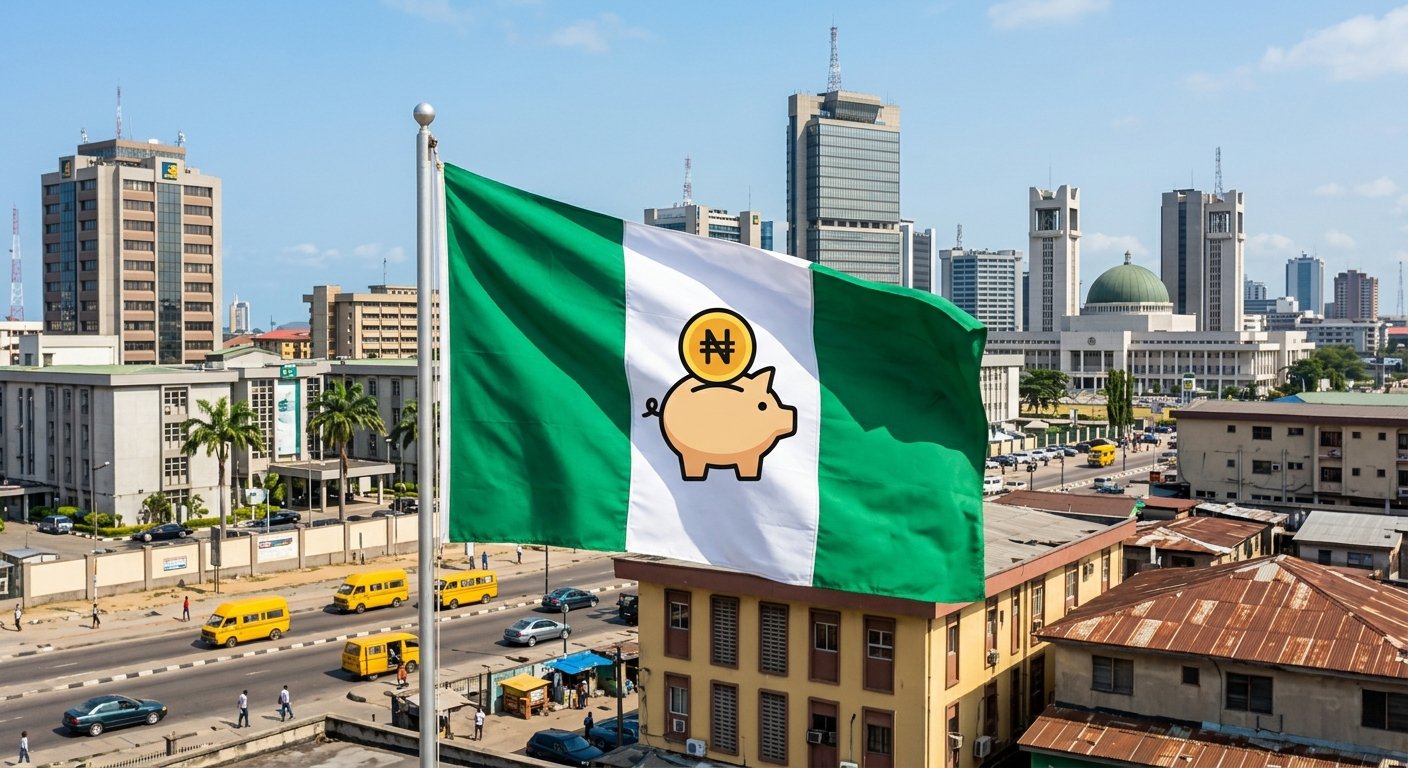
The Securities and Exchange Commission (SEC) of Nigeria is set to introduce a National Savings Scheme backed by tax incentives.
Also read; Investors trade shares worth ₦237.986 billion in the week of Dangote Refinery IPO
Director-General of the SEC, Dr Emomotimi Agama made the disclosure this weekend during a strategic partnership meeting in Abuja ahead of the Capital Market Conversation scheduled for October 19, 2026, at the State House, Abuja.
The National Savings Scheme is a part of The Presidency and SEC plan to deepen Nigeria’s capital market and mobilise domestic savings in a move to support President Bola Tinubu’s US$1 trillion economic growth target.
‘The National Savings Scheme, principally, is an inclusion tool wherein every Nigerian is allowed to save, and such savings will now be invested for the future,” Dr. Agama explained.
The scheme would include tax incentives, in alignment with the Federal Government’s wider fiscal reforms.
Arise TV reported that according to the DG, the tax reliefs for citizens below specified income thresholds, would leave low-income earners with more disposable income and potentially increase their capacity to save and invest.
The DG also announced that Vice President Shettima would endorse the Nigerian Capital Market Master Plan 2.0 at the October 19 event.
“The Nigerian Capital Market Master Plan 2.0 is a 10-year master plan that provides the direction of the market, understanding that the capital market is the barometer of the economy,” he said.
The Nigerian Capital Market Master Plan 2021-2025 (revised edition) released in November 15, 2023, also had measures to grow national savings schemes. The target as established in the plan was to achieve growth in national savings schemes investment in the capital market from zero to N1 trillion by 2025. In the 2021-2025 plan, SEC’s initiative was to engage the Federal Ministry of Finance to finalise the national savings strategy and coordinate the implementation of the strategy.
Speaking during the strategic partnership meeting, the Technical Adviser to the President on Economic and Financial Inclusion (Office of the Vice President), Dr Nurudeen Abubakar Zauro, said the administration regarded a deeper capital market as critical to mobilizing capital, broadening investment opportunities, and strengthening financial inclusion.
Zauro noted that financial inclusion should go beyond opening bank or investment accounts, stressing the need to ensure ordinary Nigerians can access financial and economic opportunities and participate in investment.

Nnamdi Maduakor is a Writer, Investor and Entrepreneur