















The Nigerian National Petroleum Company Limited (NNPC Ltd) will expand its new smart self-service filling stations across the country in phases. Its Group Chief Executive Officer, Bayo Ojulari, states that the rollout will depend on the initial station’s performance.
Ojulari described the first smart station as a proof of concept.
The company will assess its performance, customer experience, and areas needing improvement before broader deployment.
He mentioned that NNPC aims to replicate “a model that works” when scaling up.
Factors such as customer demand, location suitability, infrastructure readiness, and the availability of different energy solutions will influence how individual stations are developed.
Ojulari added that not every site will require the same set of services, so each station will be customised to serve its local community.
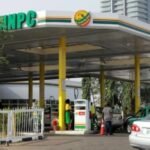
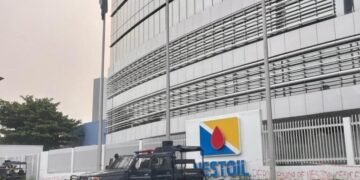
NNPC Retail, the company’s downstream subsidiary, commissioned the pilot station in Abuja.
It is situated along Bill Clinton Drive, Airport Road, and operates on a 200-kilowatt-hour solar system.
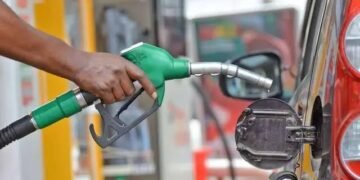
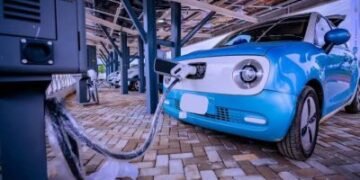
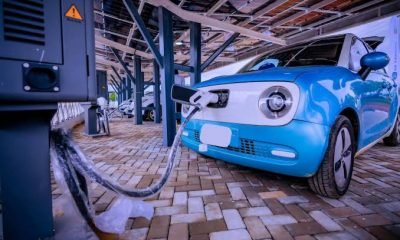
The station features 16 petrol pumps and two diesel pumps, offers self-service dispensing, and provides electric vehicle (EV) charging. It also includes an automated car wash, a lubricant service bay, and LPG facilities.
Motorists select the desired amount of fuel, pay digitally, and use a code generated after payment to activate the pump.
The process is managed through the NRL Fuel App, which provides a digital receipt with an order ID, self-service code, and QR code. Attendants will remain available to assist customers.
Ojulari explained that the technology aims to ensure accurate fuel dispensing, transparent pricing, and secure payments. NNPC is collaborating with technology providers on payment security and equipment monitoring, and will utilise customer feedback and operational data to address issues as the rollout advances.
At the launch, NNPC’s Executive Vice President, Downstream, Mumuni Dagazau, stated that the company plans to deploy between 50 and 70 smart self-service stations within six months, with several additional sites already planned for Abuja and Kano. He dismissed concerns about job losses, arguing that the new energy hubs will generate employment opportunities in areas such as automation and EV charging.
The Nigerian Midstream and Downstream Petroleum Regulatory Authority (NMDPRA) encouraged NNPC Retail and other retailers to combine technological efficiency with strict safety and environmental standards.
Ojulari noted that the project is part of NNPC’s broader transformation initiative, which the company refers to as “Fit-for-Future.”

Administrator and Writer