
























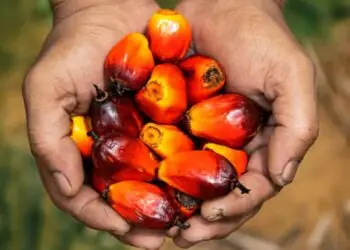
Okomu Oil Palm Company (NGX: OKOMUOIL) reported robust double-digit growth across key metrics in its audited financial statements for the year ending December 31, 2025, demonstrating resilience in Nigeria’s agro-industrial sector amid moderating inflation and stable foreign exchange.
Key Highlights
Revenue: Rose 52% to ₦198.15 billion (2024: ₦130.21 billion).
Profit before tax: Increased 69% to ₦90.65 billion (2024: ₦53.56 billion).
Profit after tax: Grew 45% to ₦57.95 billion (2024: ₦39.96 billion).
Basic earnings per share: Improved to ₦60.75 from ₦41.89.
The palm oil division contributed ₦172.6 billion in revenue approximately 60.5% year-on-year.
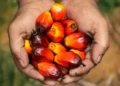
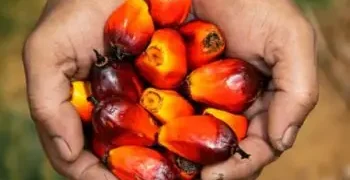
Fresh Fruit Bunch (FFB) production, including third-party purchases, reached 313,461 tonnes with a yield of 16.68 tonnes per hectare.
Crude Palm Oil (CPO) processed increased 7.8% to 74,131 tonnes at an extraction rate of 23.65%.
Gross profit for palm operations surged 93% to ₦123.35 billion.
The rubber division experienced mixed outcomes: wet cup lump harvest declined 13% to 10,420 tonnes due to European Union Deforestation Regulation (EUDR) compliance affecting third-party supplies, but higher average prices boosted gross profit to ₦17.6 billion from ₦14.6 billion.
In terms of shareholder returns, the Board paid an interim dividend of ₦40 per share and has recommended a final dividend of ₦15 per share, bringing the total dividend for 2025 to ₦55 per share.
By the end of 2025, the share price stood at ₦1,095, a 147% gain for the year, and by late March 2026, it traded as high as ₦1,766, with recent levels between ₦1,588 and ₦1,765, rewarding investors generously.
Operationally and in sustainability, the total oil palm planted area reached 19,012 hectares with 17,162 hectares mature, including replanting of 1,851 hectares.
The company maintained strict cost control and operational efficiency despite higher employee benefits and depreciation expenses.
Okomu further enhanced its sustainability credentials by completing ISO audits (9001, 14001, and 45001) with zero non-conformities, renewing Halal and RSPO certifications, and proactively aligning rubber operations with EUDR standards to preserve access to international markets.
CSR expenditure more than doubled to ₦702.2 million, focusing on community projects and scholarships in 29 host communities in Edo State.
Staff training and health & safety initiatives continued, even as the workforce was reduced to 280 employees.
The company also issued clean reports on internal controls and its ability to continue as a going concern.
Celebrating its 50th anniversary since its founding in 1976 as a federal initiative to revive Nigeria’s oil palm sector, management plans to focus on yield optimization, replanting, operational efficiency, and cost discipline in 2026.
These results emphasize Okomu’s role as one of Nigeria’s top integrated palm and rubber producers, benefiting from high domestic demand and disciplined execution.
The 46th Annual General Meeting is expected to review the final dividend and other resolutions in the upcoming months.

Administrator and Writer