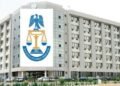




























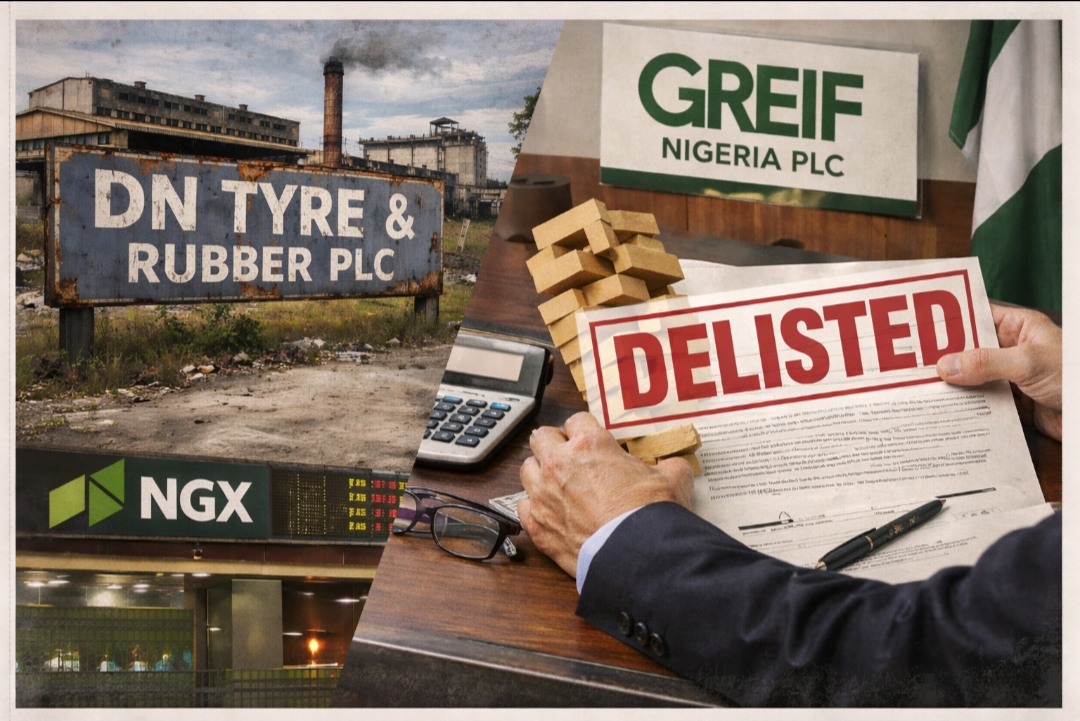
The Nigerian Exchange Limited (NGX), through its regulatory arm, NGX Regulation Limited, has delistex DN Tyre and Rubber Plc and Greif Nigeria Plc from its Daily Official List, effective Thursday, April 9, 2026.
NGX announced the delisting in a market bulletin on Thursday saying it’s “on the grounds that the Companies are operating below the listing standards of NGX and their securities are no longer considered suitable for continued listing and trading in the market.”
In an earlier notice, NGX noted that the decision was reached at a board meeting held on March 27, 2026, as part of the Exchange’s regulatory enforcement process for companies that fail to meet listing requirements.
DN Tyre’s delisting follows a prolonged period of non-compliance spanning over a decade. NGX Regulation had engaged the company for about 12 years in an effort to restore it to compliance status, but these efforts did not produce the desired results.
In April 2018, DN Tyre was issued a final delisting notice but informed the Exchange that it was undergoing a restructuring programme. This led to its classification as a “Restructuring” company in August 2018. However, the company was unable to attract investors to support its 10-year business plan covering 2020 to 2029.
Although DN Tyre was granted an additional one-year extension in 2023 to secure core investors, it failed to resolve its operational and compliance challenges. As a result, NGX Regulation resumed the delisting process, leading to its removal from the Exchange.
In contrast, the delisting of Greif Nigeria Plc is linked to the conclusion of its liquidation process, which was completed on November 27, 2025. Following the completion of liquidation, the company no longer qualifies to remain listed on the Exchange.
The Exchange stated that both companies have been duly notified of the enforcement action, and the announcement also serves as formal notice to shareholders and the investing public.
What Delisting Means for a Company
When a company is delisted from the Nigerian Exchange, its shares are removed from the official trading platform. This means investors can no longer buy or sell the company’s shares on the Exchange.
Delisting usually happens when a company fails to meet regulatory requirements, becomes inactive, undergoes liquidation, or is unable to sustain operations. For shareholders, this reduces liquidity and makes it difficult to exit their investments.
It also signals serious operational or financial challenges. In cases involving liquidation, shareholders may only receive any remaining value after all debts and obligations have been settled, which is often uncertain or minimal.
The development highlights the importance of compliance and strong operations for companies listed on the Nigerian capital market.

Ifunanya Ikueze is an Engineer, Safety Professional, Writer, Investor, Entrepreneur and Educator.